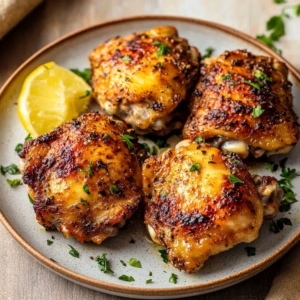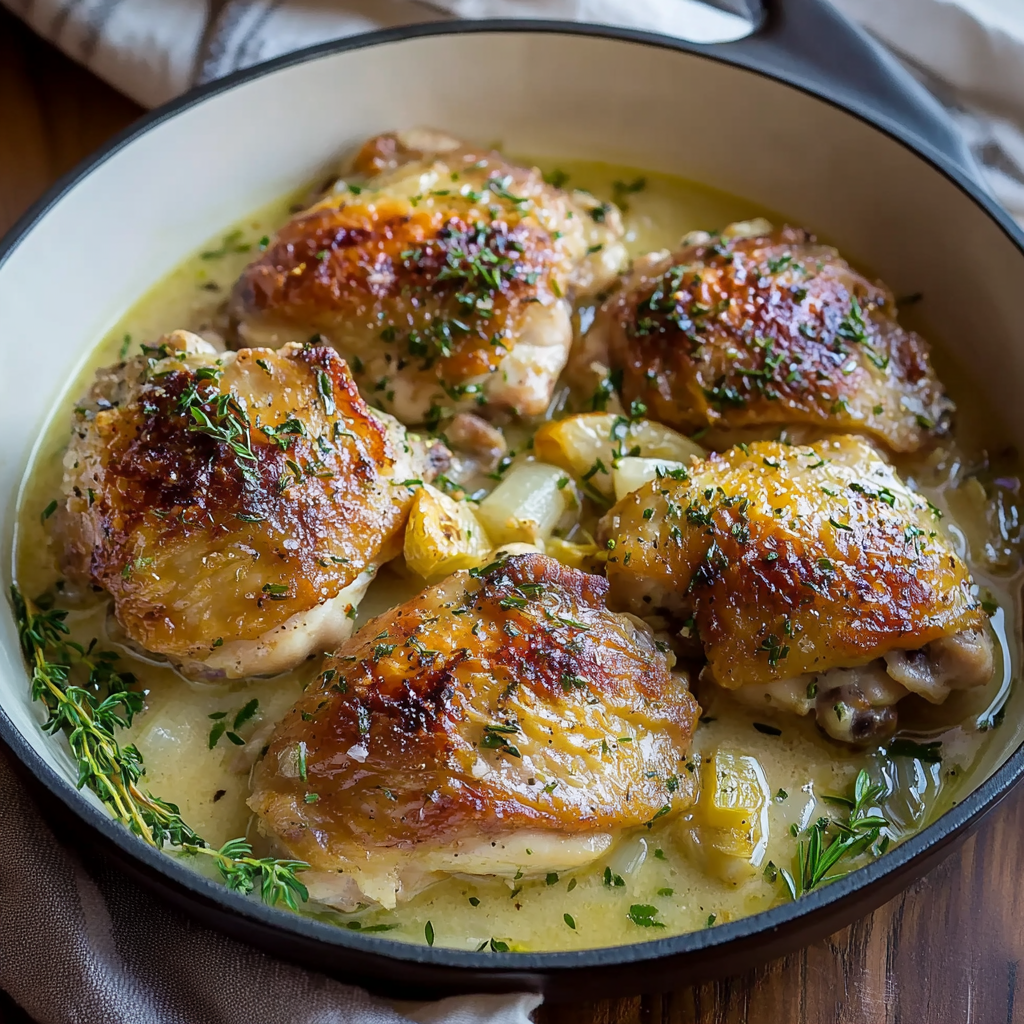
White wine chicken thighs are a masterclass in simplicity and sophistication. This French-Mediterranean-inspired dish marries golden, crispy skin with a fragrant sauce of white wine, herbs, and butter, creating a meal that feels restaurant-worthy yet stays firmly in the realm of home-cooked ease. Whether you’re craving a cozy dinner for two or hosting a crowd, these thighs deliver juicy, tender meat nestled in a sauce that practically whispers, ‘sit down and savor this.’ If you’ve ever wondered how to elevate chicken thighs beyond the ordinary, this recipe is your golden ticket to smoky, herby, wine-kissed perfection.
What Is White Wine Chicken Thighs?
At its heart, white wine chicken thighs is a one-pan French dish with roots in rustic Mediterranean cooking. The combination of chicken thighs, dry white wine, herbs, and golden pan juices creates a comforting, aromatic sauce that clings to every bite. Unlike breast-focused recipes, thighs offer a forgiving, moisture-rich cut that absorbs the wine’s brightness while developing a caramelized crust in the skillet. Traditionally, dishes like this draw from the resourcefulness of French and Italian home cooks who transformed humble ingredients into something memorable. The result is a dish that balances richness and acidity, with thyme’s earthiness grounding the wine’s fruitiness. Best of all, it’s a style that thrives on adaptability—swap the white wine for chicken broth or add seasonal vegetables for a heartier twist.
The beauty of this recipe lies in its duality: a satisfying, unapologetic indulgence for special occasions, yet simple enough for hurried weeknights. It’s the kind of dish your grandmother might make with a handful of pantry staples, only to have the whole family return for seconds. Bone-in, skin-on thighs are essential for flavor and moisture retention, while fresh thyme and a splash of white wine inject brightness into the buttery sauce. The finished product is a symphony of contrasts—crispy skin, tender meat, and a sauce that coats the back of your spoon.
Reasons to Try White Wine Chicken Thighs
If you’re a beginner in the kitchen, this recipe feels like a warm hug from a cooking mentor. There’s no need for complicated techniques or specialty ingredients; just pan-searing, deglazing, and oven roasting. It’s a forgiving recipe that rewards patient cooks without punishing the rushed ones. For busy professionals, the one-pan design means minimal cleanup, and the dish reheats beautifully for lunch the next day. Families will love how adaptable it is—serve it with mashed potatoes on a rainy Sunday or add a grain bowl twist for a healthier option. Even seasoned cooks find joy in the way the wine sauce simmers down, concentrating into a rich, velvety finish that can elevate side dishes or rice. It’s also a crowd-pleaser at dinner parties, where the aroma alone will draw compliments before the first forkful.
Those with a love for cozy, comfort food will appreciate how this dish bridges comfort and elegance. It’s perfect for slow autumn evenings or festive gatherings where a splash of sophistication is welcome. The recipe is flexible enough to accommodate dietary needs—simply omit the heavy cream and reduce the butter for a lighter version. Most importantly, it’s a recipe that teaches kitchen fundamentals: how to build flavor through Maillard reactions, how to deglaze a pan for depth, and how to achieve perfect doneness without overcooking. For home cooks seeking to grow their repertoire, white wine chicken thighs are a versatile foundation for experimentation and confidence-building.
Ingredients Needed to Make White Wine Chicken Thighs
- 6 bone-in, skin-on chicken thighs – For juiciness and a crisp sear; skin-on thighs are especially recommended for moisture and flavor
- 1 tbsp olive oil – Adds a fruity base for searing (use a light oil to preserve the wine’s flavor)
- 1 tbsp unsalted butter – Enhances richness and helps deglazing the pan
- 1 medium yellow onion (finely chopped) – Provides a sweet, caramelized backbone
- 4 garlic cloves (minced) – Sharp yet balanced when cooked properly
- 1 cup dry white wine (like Sauvignon Blanc or Pinot Grigio) – The base of the sauce; choose one you’d drink for best results
- 1 cup chicken broth – Adds depth and ensures the chicken stays tender
- 2 tsp fresh thyme leaves – Fresh is best, but culinary-grade dried thyme is a suitable substitute
- 1 bay leaf – Infuses subtle earthiness
- ¼ cup heavy cream (optional) – For a luxuriously rich finish; omit for a lighter sauce
- Salt and freshly ground black pepper – For seasoning and building layers of flavor
Instructions to Make White Wine Chicken Thighs – Step by Step
Step 1: Start by preheating your oven to 375°F (190°C). While it warms up, prepare the chicken. Pat the thighs dry using paper towels—this is crucial for achieving perfect sear marks. Generously season both sides with salt and pepper, pressing into the meat to ensure even coverage. Letting the chicken rest on a plate at room temperature for 15–20 minutes before searing will help it cook more evenly, especially if you pulled it straight from the fridge.
Step 2: Heat a large oven-safe skillet (preferably stainless steel or cast iron) over medium-high heat until the olive oil shimmers. Add the chicken thighs, skin-side down, and resist the urge to move them for 6–8 minutes. This allows the skin to crisp into a golden shell. When you notice the edges lifting from the pan and the skin has a firm texture, gently flip the thighs. Cook the other side for 2–3 minutes to seal in juices, then transfer them to a plate. Set the pan aside—this golden-brown residue will become your sauce’s foundation.
Step 3: Reduce the heat to medium and add the butter to the same skillet. Wait for it to melt and foam, then stir in the chopped onion. Cook for 4–5 minutes, stirring occasionally, until the onions soften and acquire a light golden hue. Be careful not to rush this step—caramelized onions require patience. Once the onions are tender, add the minced garlic and cook for 30 seconds, keeping a close eye to prevent burning. At this stage, the house should smell fragrant with garlic and butter.
Step 4: Now comes the magic of deglazing. Pour in the white wine, and using a wooden spoon, vigorously scrape up the browned bits (fond) from the pan bottom. These golden flecks are packed with flavor and will give your sauce a deep roasted character. Let the wine bubble for 2–3 minutes, reducing by about half. If you notice the mixture starting to thicken, that’s a good sign. If not, don’t worry—this stage is more about extraction than cooking the sauce fully yet.
Step 5: Add the chicken broth, fresh thyme, and bay leaf to the pan. Bring the mixture to a gentle simmer, stirring to combine. Carefully return the chicken thighs to the skillet skin-side up, nestling them into the liquid. This allows the sauce to baste the meat and finish cooking it in a flavorful environment. It’s a small act, but it ensures the meat stays juicy while building a sauce that clings to every surface.
Step 6: Transfer the skillet to the preheated oven. Bake for 20–25 minutes, allowing the chicken to cook through and the sauce to meld. Use a meat thermometer to confirm the chicken is fully cooked (165°F or 74°C at the thickest part). If you prefer a creamier texture, stir in the heavy cream after removing the skillet from the oven. This step softens the sauce’s acidity and rounds out the flavors. Let the chicken rest in the skillet for 5 minutes—the resting period ensures the juices redistribute and the flavors settle, making each bite more satisfying. Finally, remove the bay leaf and serve, spooning the sauce generously over each portion.
Chef’s Tips for a Perfect Result
- Purchase chicken thighs a day in advance and refrigerate, uncovered, to dry out the skin—this dramatically improves crispiness.
- For a bolder flavor, deglaze the pan with wine first, then add broth—this concentrates the wine’s aroma into the final sauce.
- Stir the thyme into the sauce toward the end of cooking to preserve its bright, grassy flavor—overcooking can mute its vibrancy.
- If your sauce is too thin after baking, return the skillet to high heat on the stovetop and simmer for 2–3 minutes to tighten it up before adding cream.
- Let the chicken rest on a wire rack (not a paper towel-lined plate) to prevent the skin from steaming and losing its crispness.
Variations and Substitutions
- Vegan Alternative: Replace the chicken with cauliflower florets or portobello mushrooms. Use vegan butter and omit the heavy cream, or substitute with coconut cream for richness. The wine and herbs still shine for a plant-forward reinterpretation.
- Gluten-Free Tip: Ensure your chicken broth is gluten-free (check labels), and avoid any flour-thickened substitutions. The natural starches in the onion and roasting process provide enough body for the sauce.
- Low-Carb Version: Serve over cauliflower rice or zucchini noodles instead of potatoes or pasta. The dish remains indulgent without compromising your dietary goals.
- Budget Swap: Use store-brand white wine or opt for a non-alcoholic wine substitute (check for ones infused with citrus or herbs). The dish still gains depth without a splurge.
How to Serve and Pair
Elevate this dish with simple, supportive sides that let the sauce shine. A starch like herbed mashed potatoes or crusty bread is ideal for soaking up the pan drippings. For a Mediterranean twist, pair with roasted lemon wedges and a platter of olives. To balance richness, serve a crisp green salad with lemon vinaigrette or sautéed green beans with a hint of garlic. If you’re feeling festive, pour a dry white wine (the same type used in the recipe) alongside the meal. The wine’s acidity will harmonize with the dish’s buttery sauce. Presentation-wise, plate the chicken on a warm serving platter with a few spoonfuls of sauce drizzled on top—don’t skimp; the sauce is the star of the show.
Storage and Reheating
Refrigerator: Store cooled chicken and sauce in an airtight container for up to 3 days. The sauce will thicken, so add a splash of broth or water before reheating to loosen it.
Freezer: Freeze for 2–3 months in a freezer-safe container. Thaw overnight in the fridge before reheating to preserve texture.
Room Temperature: The dish is best served fresh. If needed, keep it on the stove over low heat for up to 2 hours, covered, while you prepare the rest of the meal.
Reheating: For oven-reheating, cover the skillet with foil and warm at 350°F for 15–20 minutes. For stovetop, use a nonstick pan over medium-low heat, adding a splash of water or broth to prevent the sauce from sticking. Avoid microwaves if possible—high heat will make the chicken tough and dry out the sauce.
Nutritional Values
- Calories: 345 per serving
- Protein: 32g
- Carbohydrates: 6g
- Fat: 20g
- Fiber: 1g
Approximate values.
Frequently Asked Questions
Can I use boneless chicken thighs instead of bone-in?
Yes, but bone-in thighs cook more evenly and develop a more intense flavor. If using boneless, reduce the baking time by 5–7 minutes and check for doneness earlier to prevent overcooking.
How do I know the chicken is fully cooked?
Insert a meat thermometer into the thickest part—the internal temperature should reach 165°F (74°C). The juices should run clear, and the meat should be firm to the touch but still slightly elastic.
Why is my sauce not thickening properly?
If the sauce remains too thin, return the skillet to medium-high heat after baking and let it simmer for 2–3 minutes with the lid off. Avoid high heat for too long, as this can dry out the chicken. For a creamier texture, stir in the heavy cream after baking.
Can I prep this in advance?
Yes, sear the chicken and prepare the sauce up to a day ahead. Refrigerate and finish cooking the chicken in the oven just before serving. Alternatively, bake everything ahead, reheat gently, and re-steam the sauce over low heat to restore its gloss.
What’s the best way to customize the flavor?
Add sautéed mushrooms for an earthy note, or toss in cherry tomatoes during the wine-reduction stage for a tangy twist. For extra richness, top individual portions with a dollop of pesto or crumbled feta before serving.
Conclusion
White wine chicken thighs bring together the best of French and Mediterranean traditions in a dish that’s as effortless as it is flavorful. With golden skin, fragrant herbs, and a sauce that lingers on your palate, it’s a recipe that invites you to slow down and savor every bite. Whether you’re craving a cozy family meal or an elegant dinner party showstopper, this dish delivers comfort with a touch of refinement. The secret lies in that rich, wine-infused sauce—a bold, aromatic finish that will leave you planning your next craving well before your first bite.
Print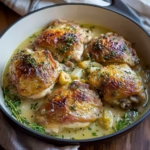
White Wine Chicken Thighs – A Flavorful, One-Pan French-Mediterranean Dish
- Prep Time: 10
- Cook Time: 35
- Total Time: 45
- Yield: 4 servings 1x
- Category: dinner
- Method: Pan-Searing & Roasting
- Cuisine: French-Mediterranean
- Diet: Non-Vegetarian
Description
Crispy skin chicken thighs with a rich, herbed butter sauce made using white wine substituted with chicken broth. A one-pan French-Mediterranean favorite that’s crispy, juicy, and aromatic for effortless elegance.
Ingredients
4 bone-in, skin-on chicken thighs
1 cup chicken broth (non-alcoholic)
2 tbsp fresh thyme leaves
2 cloves garlic, minced
2 tbsp unsalted butter
1 lemon, zested
1 tsp salt
1/2 tsp black pepper
Instructions
Preheat oven to 400°F (200°C)
Season chicken thighs with salt and pepper
Heat skillet over medium-high heat, add thighs skin-side down, and sear 5 minutes
Flip and sear other side 3 minutes
Deglaze pan with chicken broth and garlic; stir to loosen browned bits
Stir in thyme and lemon zest, bring to simmer
Return chicken to pan, add butter, and cook 2-3 minutes
Transfer pan to oven, bake 15-20 minutes until thighs are vibrant and sauce thickens
Rest 5 minutes before serving
Notes
Use high-heat-resistant skillet like cast iron for best results
Substitute thyme with rosemary or parsley if needed
Add zucchini, cherry tomatoes, or green beans in the last 10 minutes of baking for a heartier version
Store leftovers in airtight container (excluding skin) up to 3 days
Nutrition
- Serving Size: 1 chicken thigh with 1/4 cup sauce
- Calories: 250
- Sugar: 1g
- Sodium: 180mg
- Fat: 14g
- Saturated Fat: 8g
- Carbohydrates: 2g
- Fiber: 0g
- Protein: 30g
- Cholesterol: 150mg